
Lest we forget.
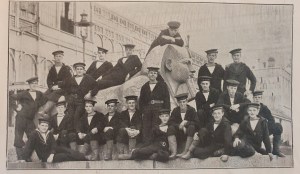
In August 1914, Winston Churchill when he was First Lord of the Admiralty, he formed a new fighting division call the Royal Navy Division (R.N.D). The division was created to bring together existing reserves. The whole grounds of Crystal Palace was taken over by the Admiralty to become a “Royal Navy Volunteer Reserve” (RNVR) training depot. Between 1914-1918 the RNVR trained 125,000 ratings and officers at this depot, that became the training headquarters for R.N.D, and affectionally known by the ratings and the public at the time as “HMS Crystal Palace“.
This shore station was formally called training depot HMS Victory VI (and II). And being run by the Royal Navy, the Crystal Palace depot was run (and named) like a ship. Reported in the Wesleyan Magazine in 1916. “Within this vast enclosure of glass life is ordered after the fashion of a ship’s routine. Time is told off in two, four, six, or eight ‘bells’; the men sleep in hammocks and take their meals in ‘mess decks’; they muster on the ‘quarter deck,’ and getting ‘shore leave,’ go ashore by the ‘liberty boat’; or if out of health are sent to the ‘sick bay.’
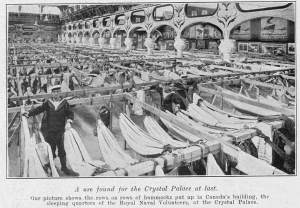
Notwithstanding all this nautical terminology and their Navy training, the majority of the men also received an infantry training. This double function of the Brigade’s training – service by sea or land was unique for the time. The terms of enlistment were for service ashore or afloat in any part of the world.
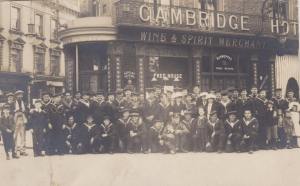
Another difference for RNVR recruits joining up and training Crystal Palace was that they were recruited from all over the kingdom. “Men came pouring in and one heard a strange mingling of dialects“. The Army at the time was recruited mainly more or less from the counties whose names they bear, that gave the Army regiments a stronger local interest.
From H.M.S. Crystal Palace (1916) By Rev John Carter: Our men came from everywhere in the British Isles, from Shetland in the north to Scilly in the south. Scotland sent a fine contribution gathered from the fishing stations on the Eastern and Western Coasts, men cradled on the sea, hardy, fearless, reliable men who found a fitting task in sweeping the North Sea for German mines. From the north of England coalfields came hundreds of miners, including most of our Medical Unit of ambulance men, strong in character as well as physique, and largely Methodist. Many were married men who gave up two to five pounds a week to serve their country for fifteen pence a day and a wife’s allowance. Later we had a strong contingent from gallant little Wales.
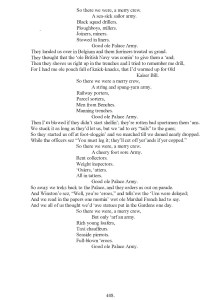
The RNVR created their own song, that was heard in the public houses around Crystal Palace, ‘The Crystal Palace Army’.
Inside the grounds: “men may take up wireless telegraphy, signalling, and more mechanical and scientific branches of the service… The pay commences at 1s 3d a day, and rises according to capabilities. …The grounds compromise 220 acres for company and battalion drill, general manoeuvres, physical training, rifle and revolver shooting, bayonet exercises, charging and and fighting etc. All training in wet and dry weather. …there was seating accommodation in the “mess rooms” for 9,800 men, who are all fed at the same time. In wet weather 10,000 men can be drilled and physically trained on the main floor of the Crystal Palace” (The Southern Reporter, 25th November 1915).
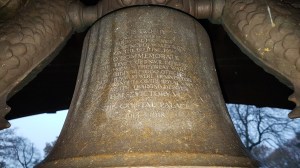
There is a dedicated commemorative war memorial “Trophy” to RNVR installed in the grounds of Crystal Palace unveiled by the H.R.H The Prince of Wales in 1931. It was then relocated to it’s current site by the Cricket Pitch. Thanks to Crystal Palace Foundation who helped the Royal Naval Volunteer Reserve Trophy (War Memorial) become Nationally Listed Grade II with Historic England. This RNVR commemorative Trophy in Crystal Palace is unique because it is the only commemorative memorial entirely dedicated to the RNVR in the country at the time, and for all the men who passed through Crystal Palace 1914 to 1918. Sadly the war memorial is in need of restoration following the theft of its main feature, the Trophy bell in 2024.


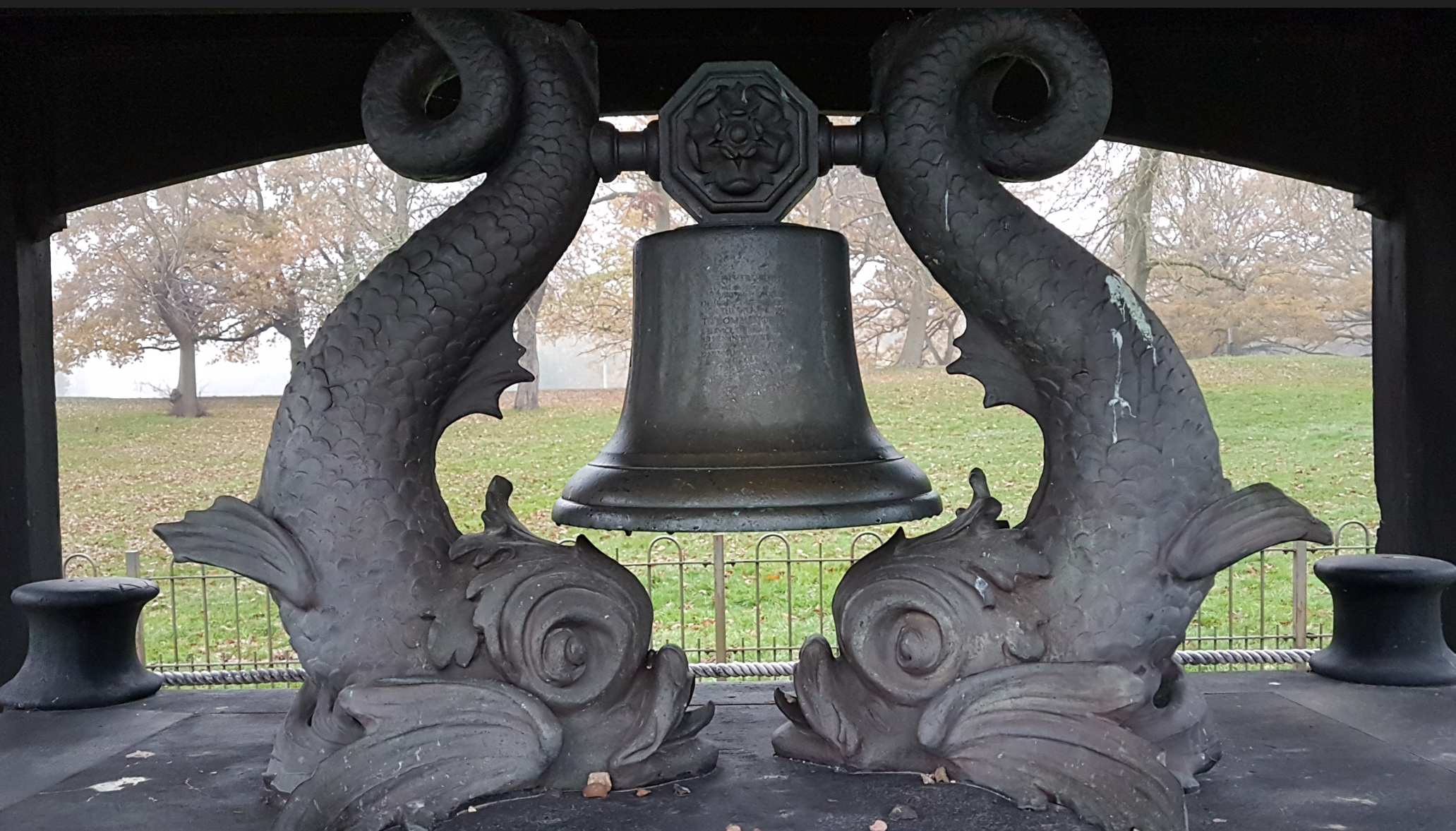
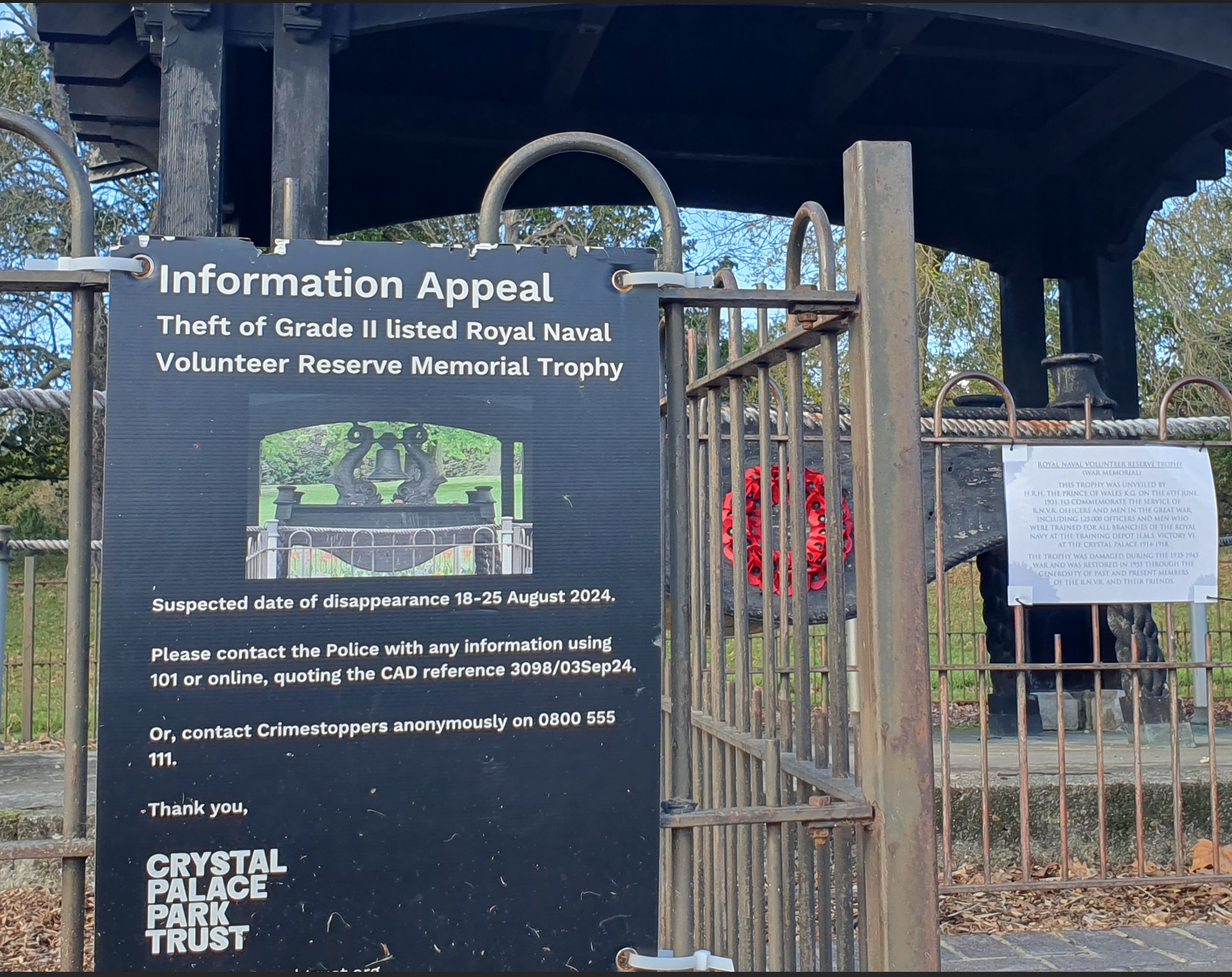
“HMS Crystal Palace” was also where the WRNS (Women’s Royal Naval Service) were first formed too in WWI.
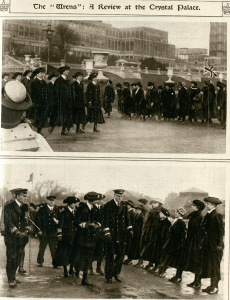
Life on “HMS Crystal Palace”…


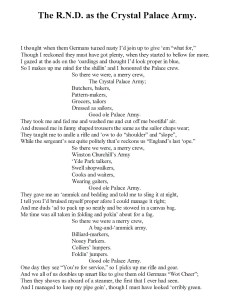

If you have history or connection to RNVR at Crystal Palace please do get in touch: info@cpneighbours.org
 cpneighbours.org